◆

Devlog

Building Ascension, told from the inside: decisions, mistakes and progress.

Subscribe via RSS

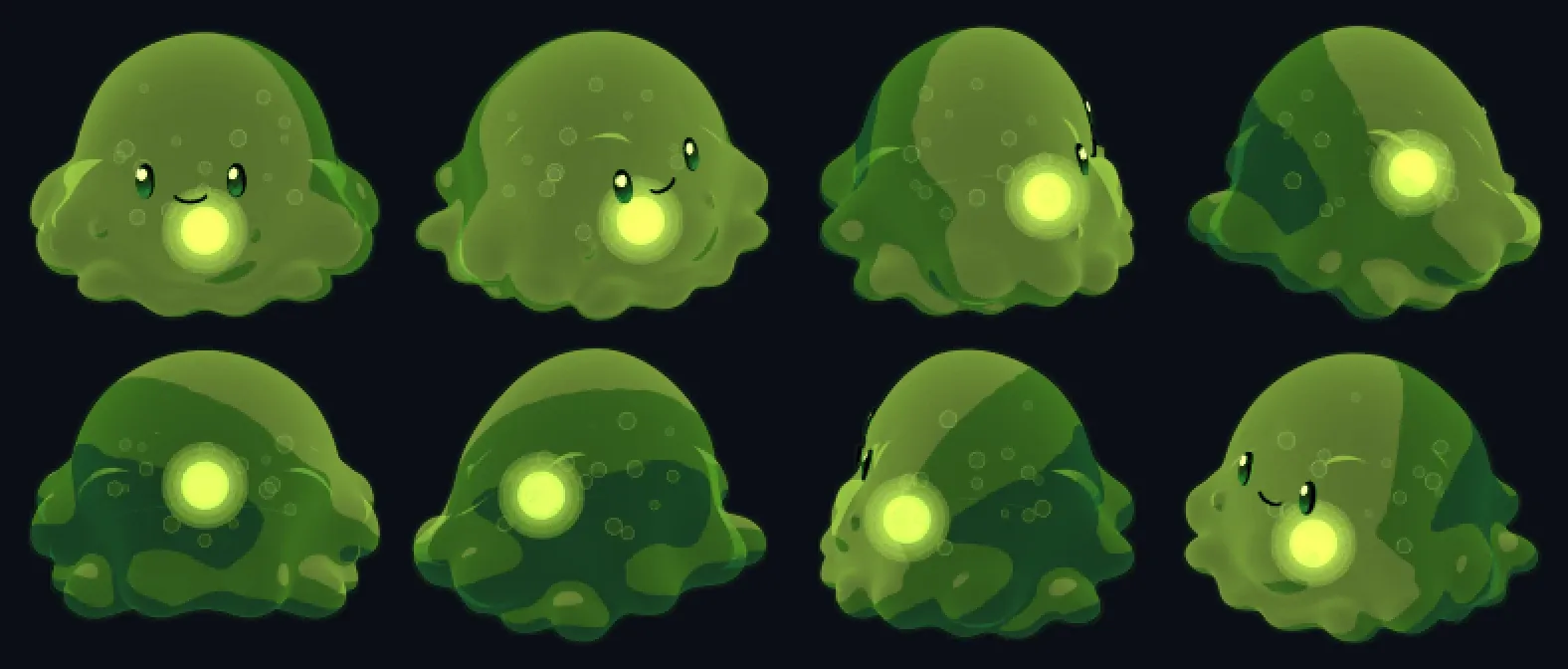
The new slime seen from all eight directions at once, in a four-by-two grid
Art

The slime needed a new body

In September I wrote that if the slime ever needed a new body, we'd change the body. Three weeks later it needed one. This is the second life of the game's first enemy, and what it cost to make a gel move like a gel.

5 min read

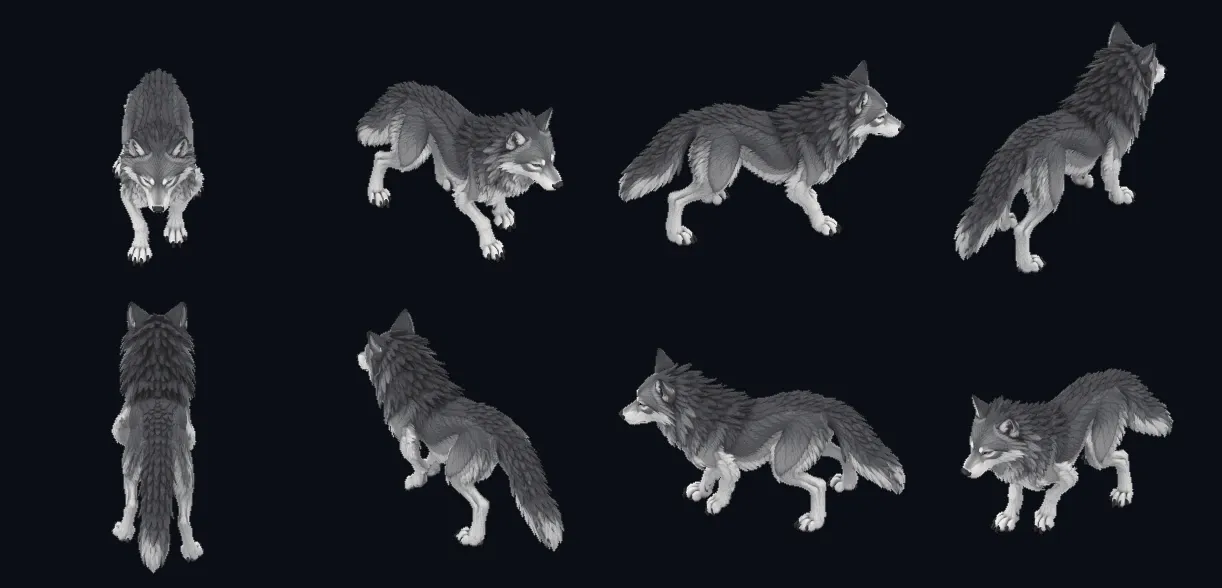
The wolf walking, seen from all eight directions at once in a four-by-two grid
Art

The wolf: three separate gaits and a howl with conditions

A wolf doesn't run by speeding up its walk. Walking, trotting and galloping are different coordinations, and all three are animated separately. A hundred and twenty-eight animations later, the howl calls the pack — but only when it's alone and wounded.

6 min read

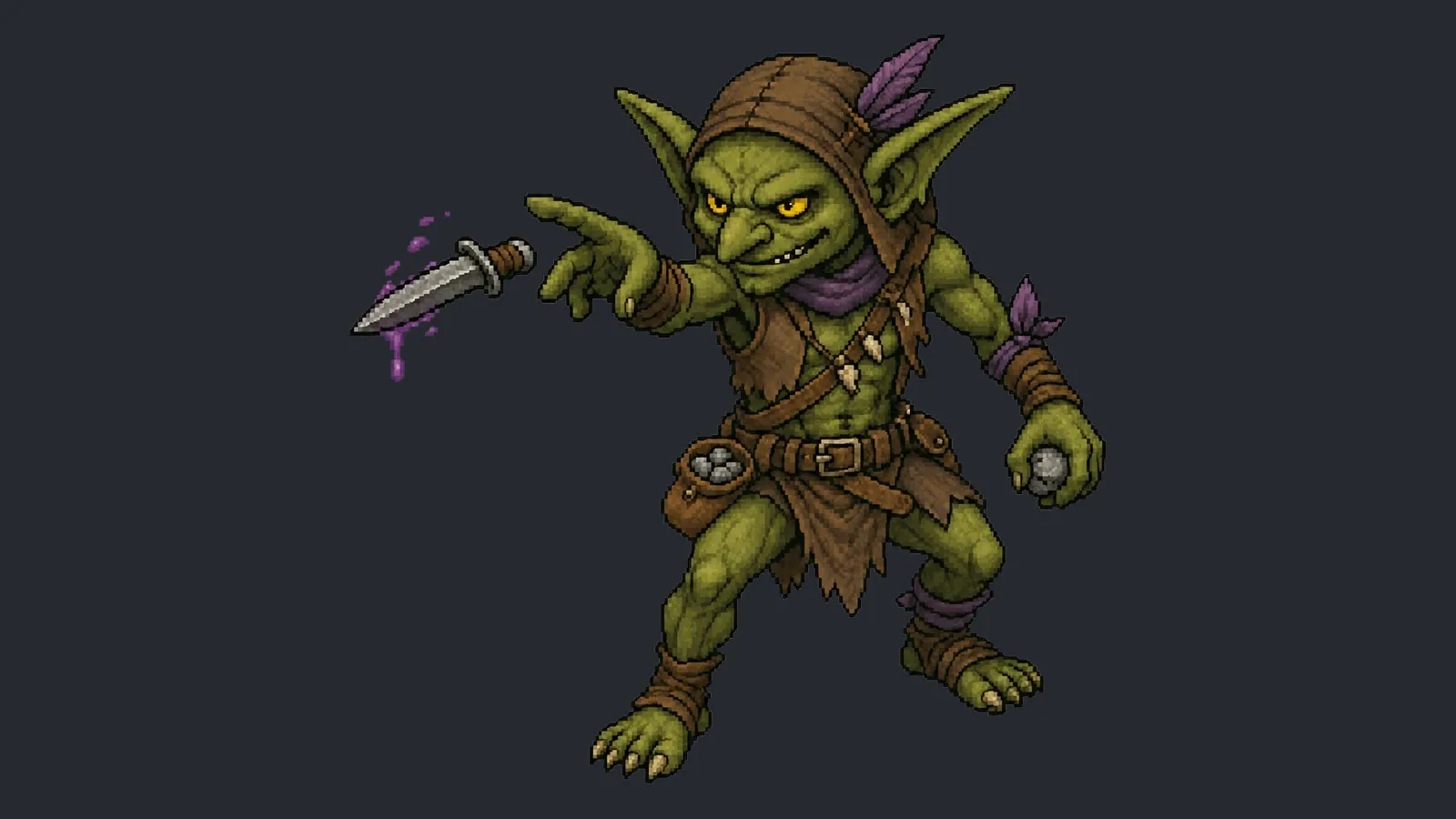
Goblin Scout concept: moss-green skin, pointed ears, leather hood, purple feather, poisoned dagger and a stone in hand
Art

The goblin: four months of waiting and a day of work

The concept is from 8 June, the same small hours as Leo's. It waited four months for a production chain to exist, and once it did, it took a day and a half to be animated and fighting.

2 min read

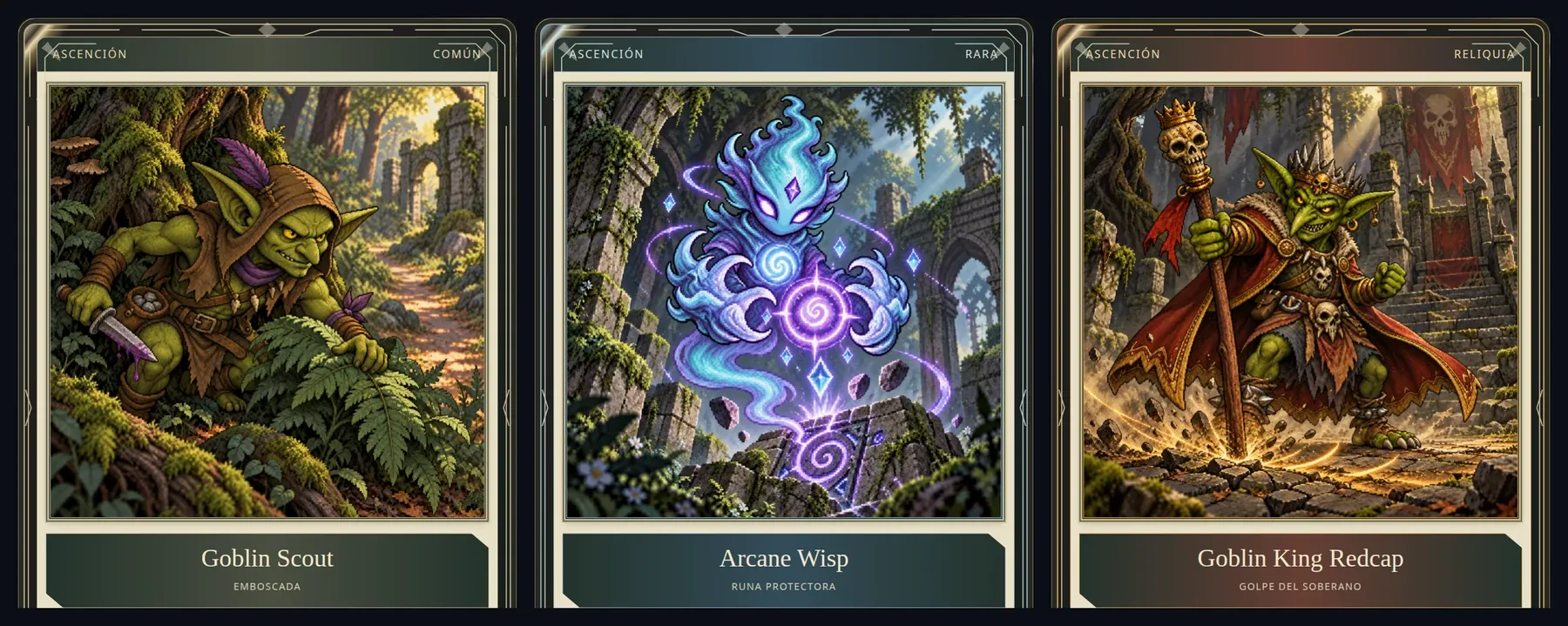
Three Ascension cards side by side: a goblin scout among ferns, an arcane wisp over ruins, and a goblin king striking the flagstones
Design

One card for every creature in the bestiary

Every monster in the codex leaves a card: its own illustration, a frame that is interface rather than artwork, and text that says what happens, when, and where it stops. Two hundred and fifty-three of them, still a proposal.

4 min read

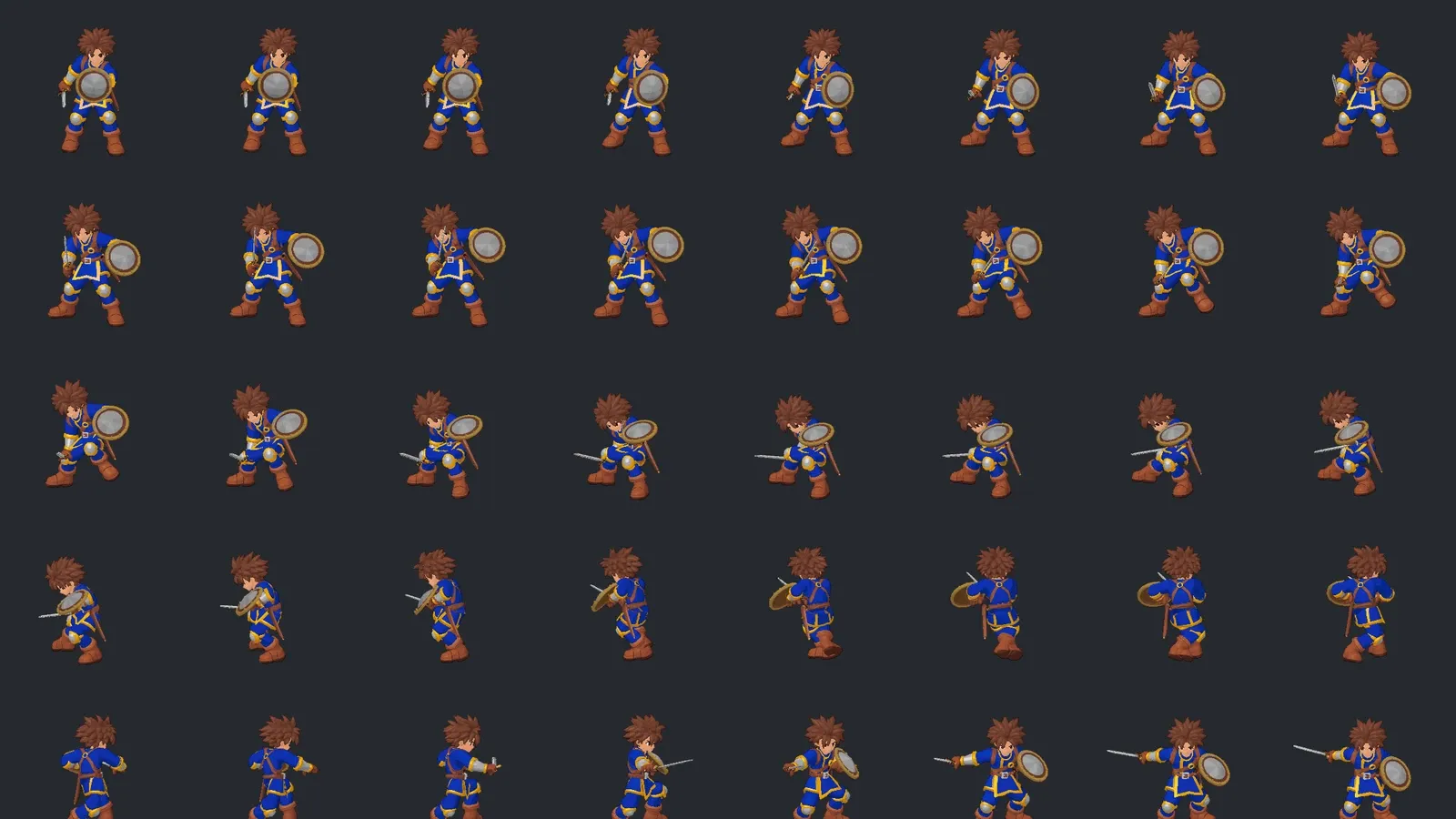
Frame sheet of Leo's charged spin: more than sixty frames in a grid
Art

All of Leo: twenty-three animations, in the game

Idle, walk, run, two-cut attack, jump, shield dodge, defeat. The full catalogue running inside Godot, at game scale and real speed, half of it driven by the controller rather than played back.

2 min read

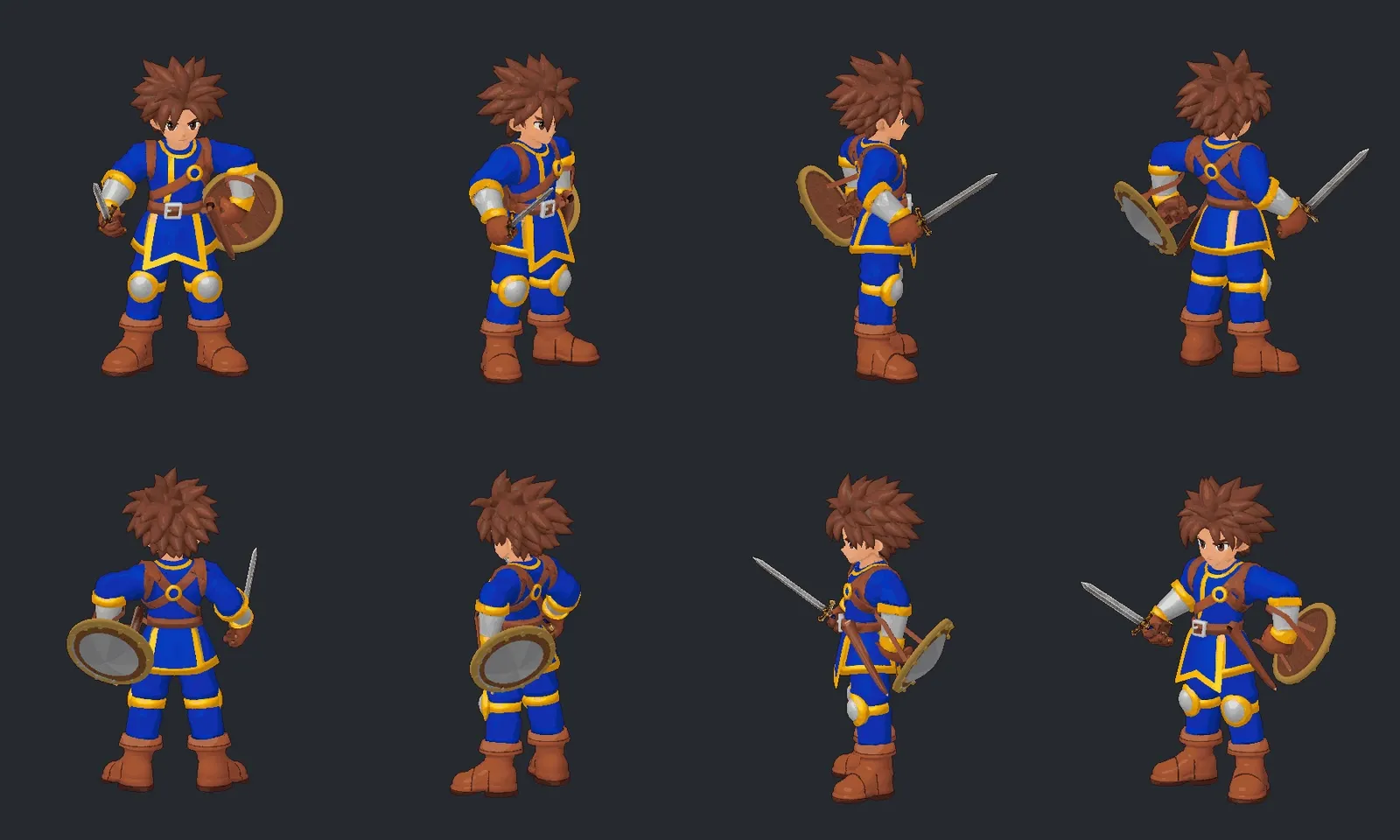
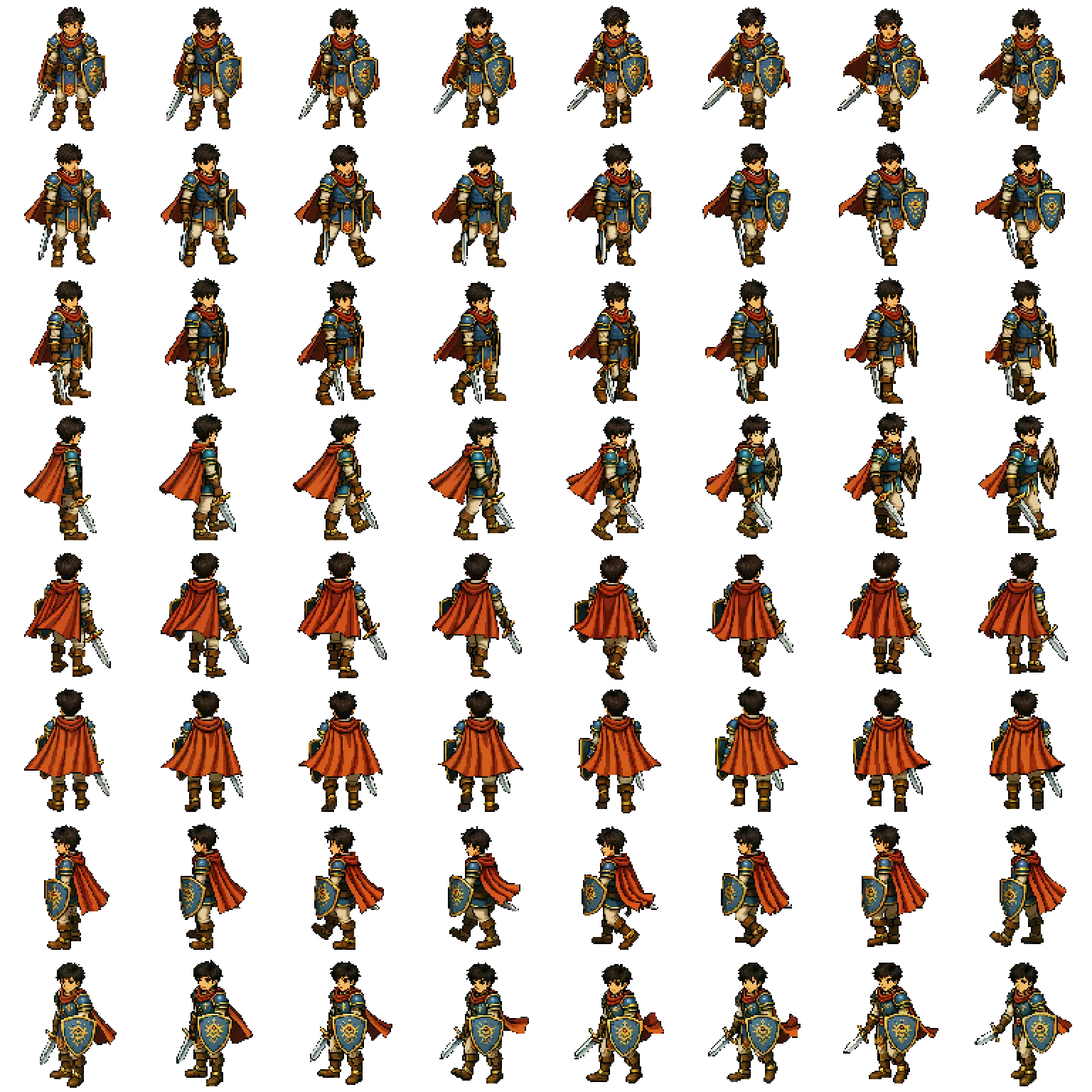
Leo drawing his sword, seen from all eight directions at once in a four-by-two grid
Art

The sword draw, in eight directions

Two weeks ago I wrote that the right answer was to split the jobs: 3D moves, 2D draws. I was wrong. The answer was to stop patching.

4 min read

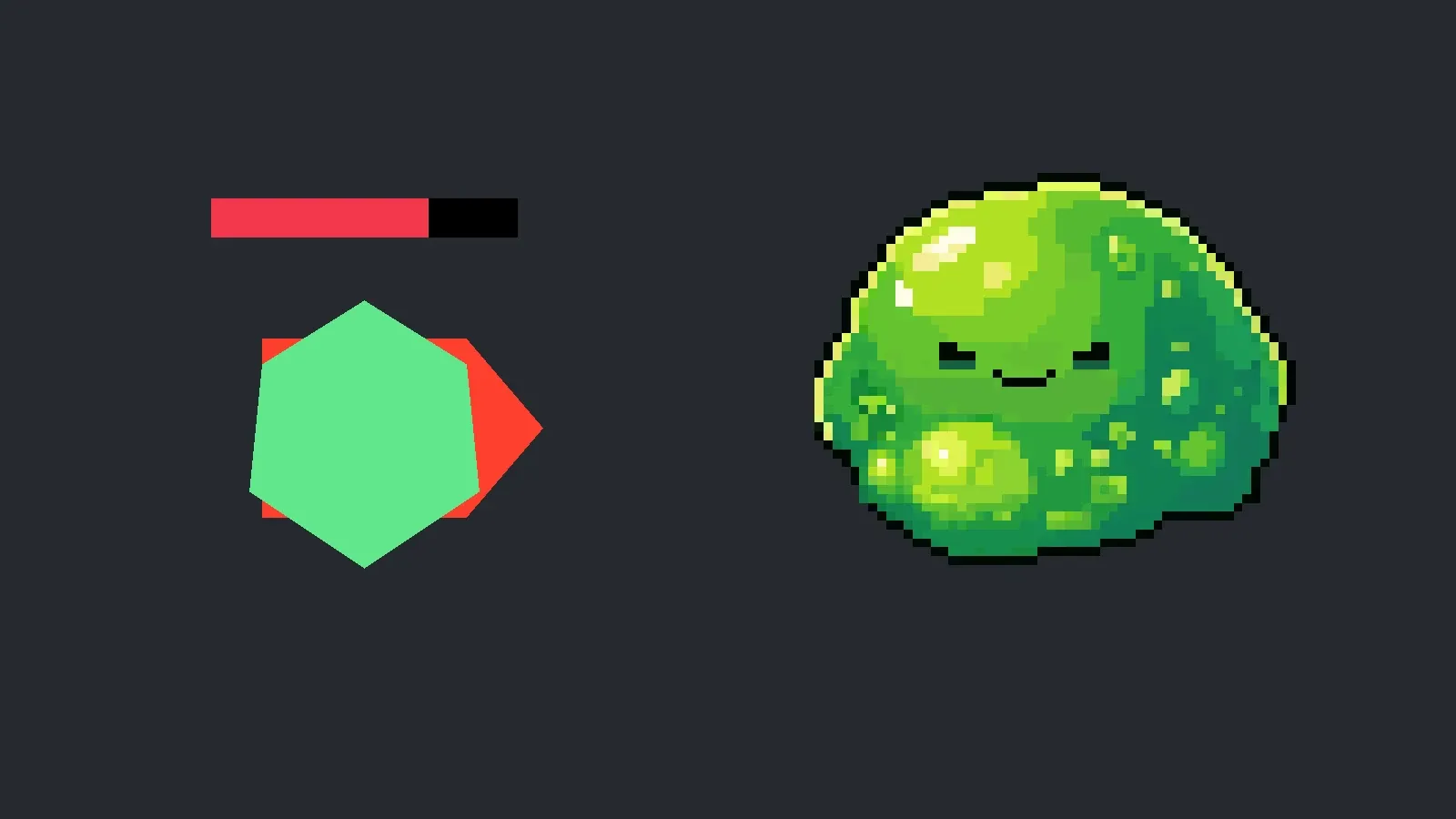
On the left the green hexagon with its attack wedge and health bar; on the right the finished slime, at the same in-game scale
Art

From polygon to slime

For months Ascension's first enemy was a green hexagon with a red wedge. That is how its brain got built before its body, and how the body arrived afterwards: nine animations in eight directions.

5 min read

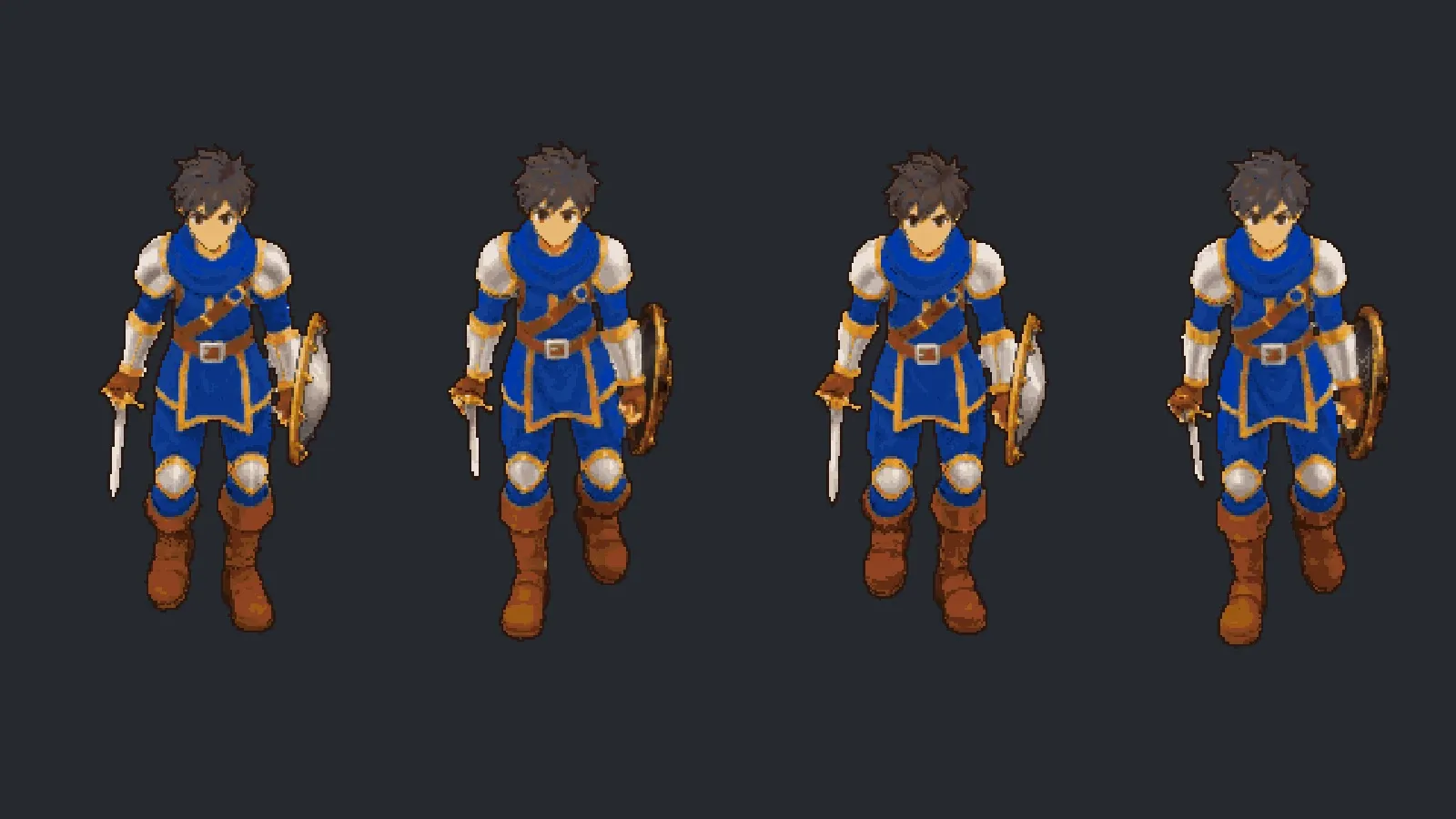
Four phases of Leo's walk cycle in the 2D finish, in a row on a dark background
Art

Leo repainted: the finish leaves 3D and goes back to drawing

The three-dimensional model was finished and still did not fit on screen. The way out was not choosing between 3D and 2D but splitting the jobs: 3D moves, 2D draws. Seventy frames repainted one by one for a single walk cycle.

4 min read

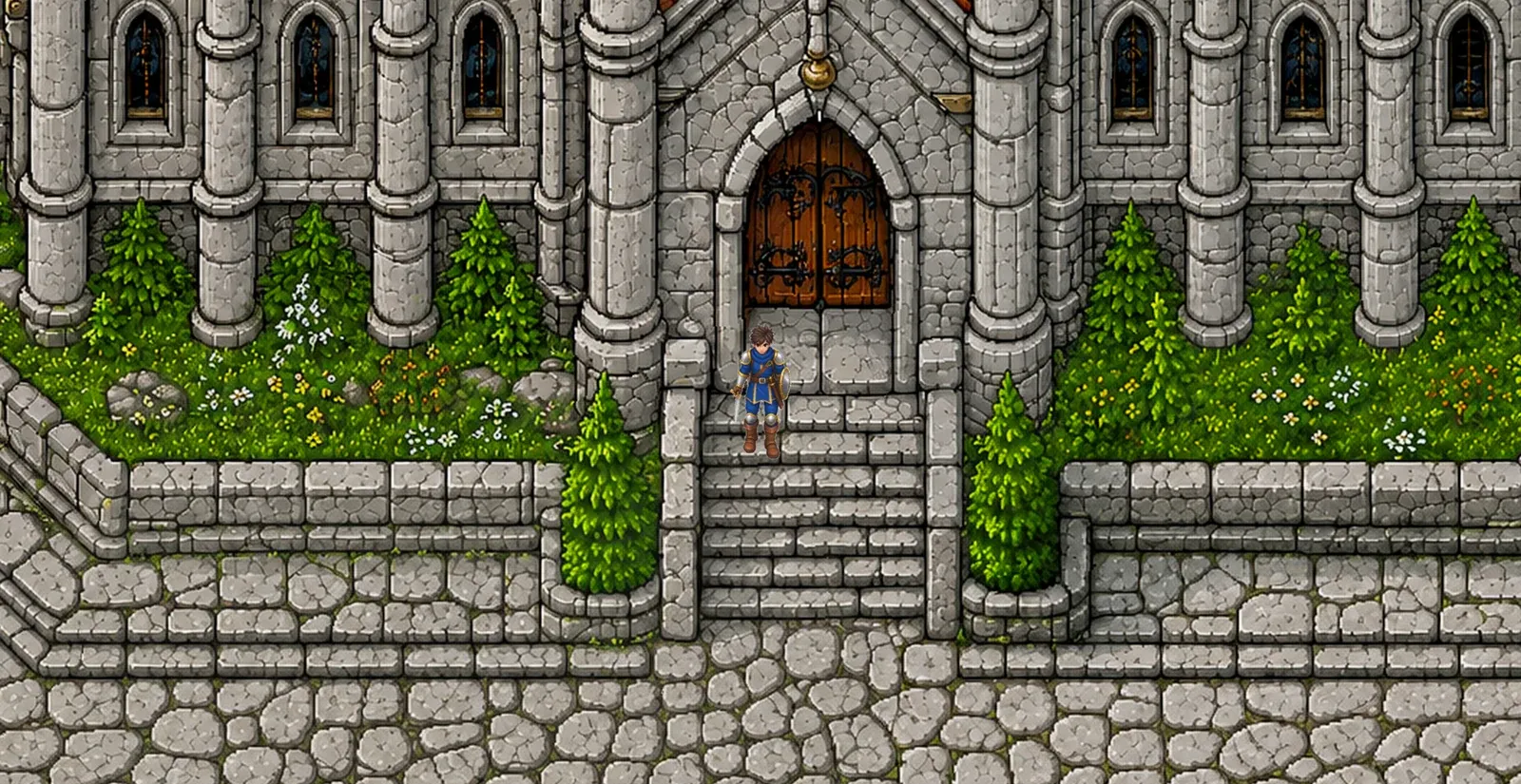
Leo at the cathedral portico in the citadel, in the exterior framing
Design

How much world fits on screen

It started as a sharpness problem and turned into the most expensive decision in the project: how tall the character should be on screen. Instead of picking by eye, I measured Terranigma and Eastward pixel by pixel.

5 min read

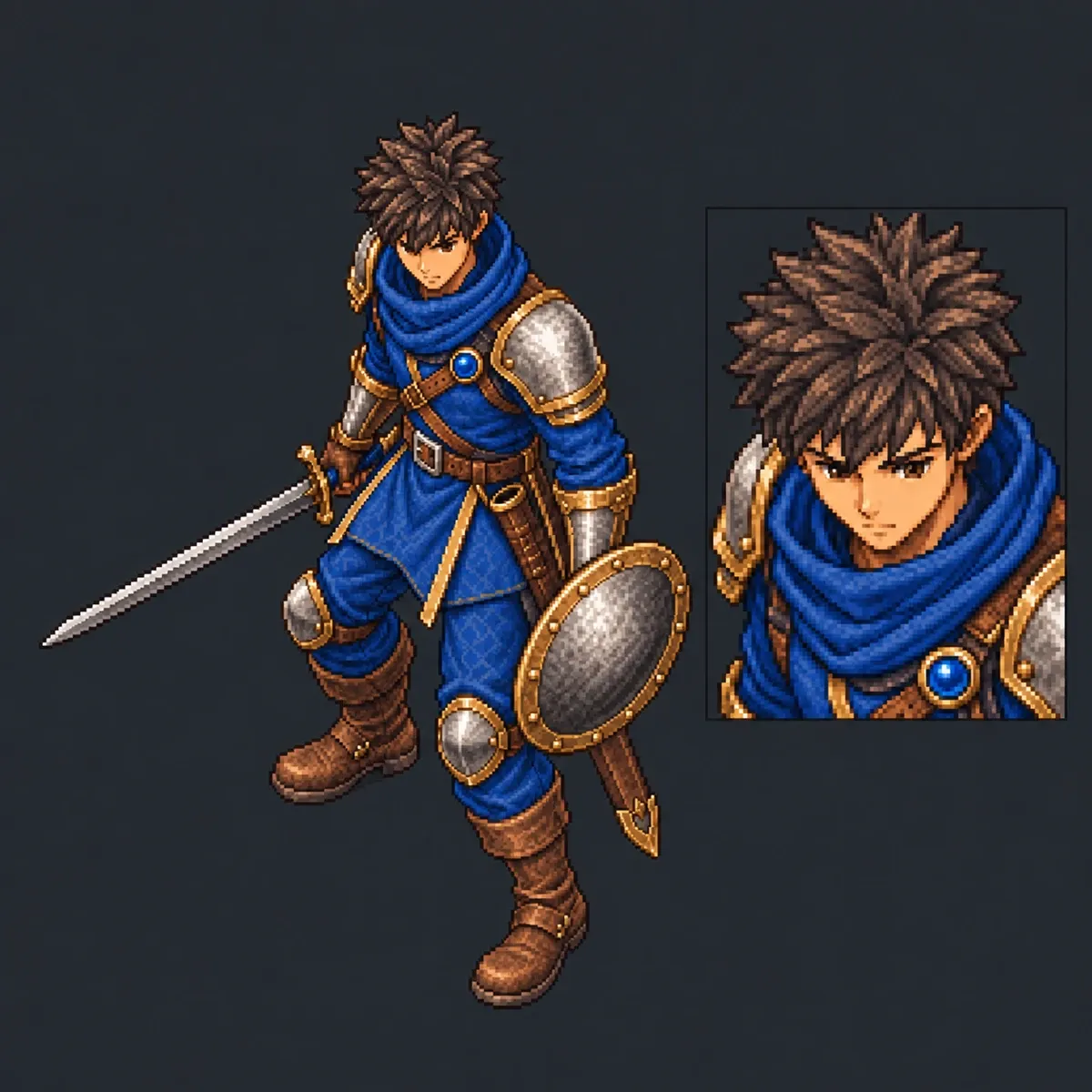
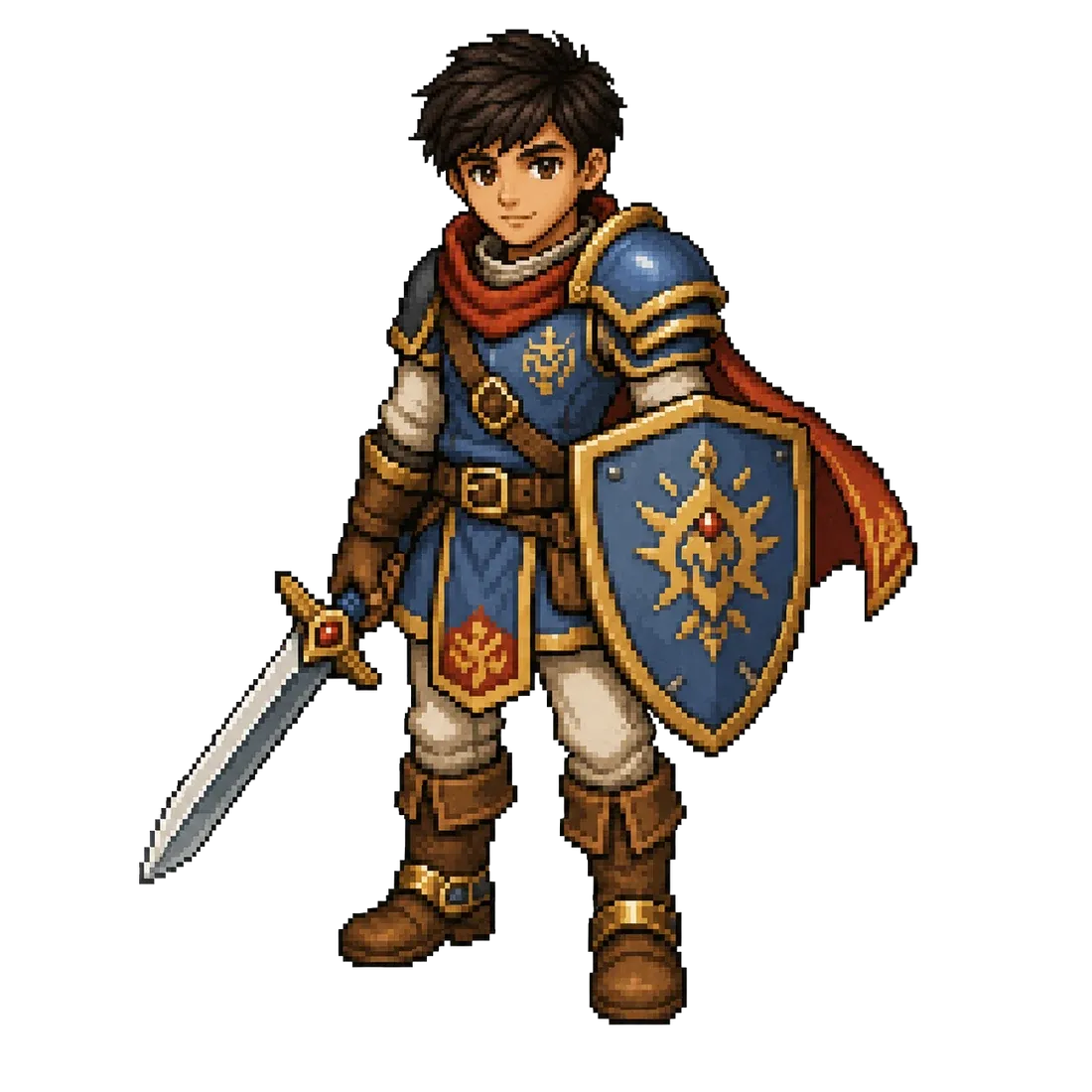
Leo in finish C: blue tunic and scarf, steel pauldrons with gold trim, round shield and drawn sword
Art

Leo C: ninety-three frames to draw a sword

A new line with its own finish, eight directions that are headings rather than sides, and a sword draw rejected once for deforming the arm despite passing technical review.

2 min read

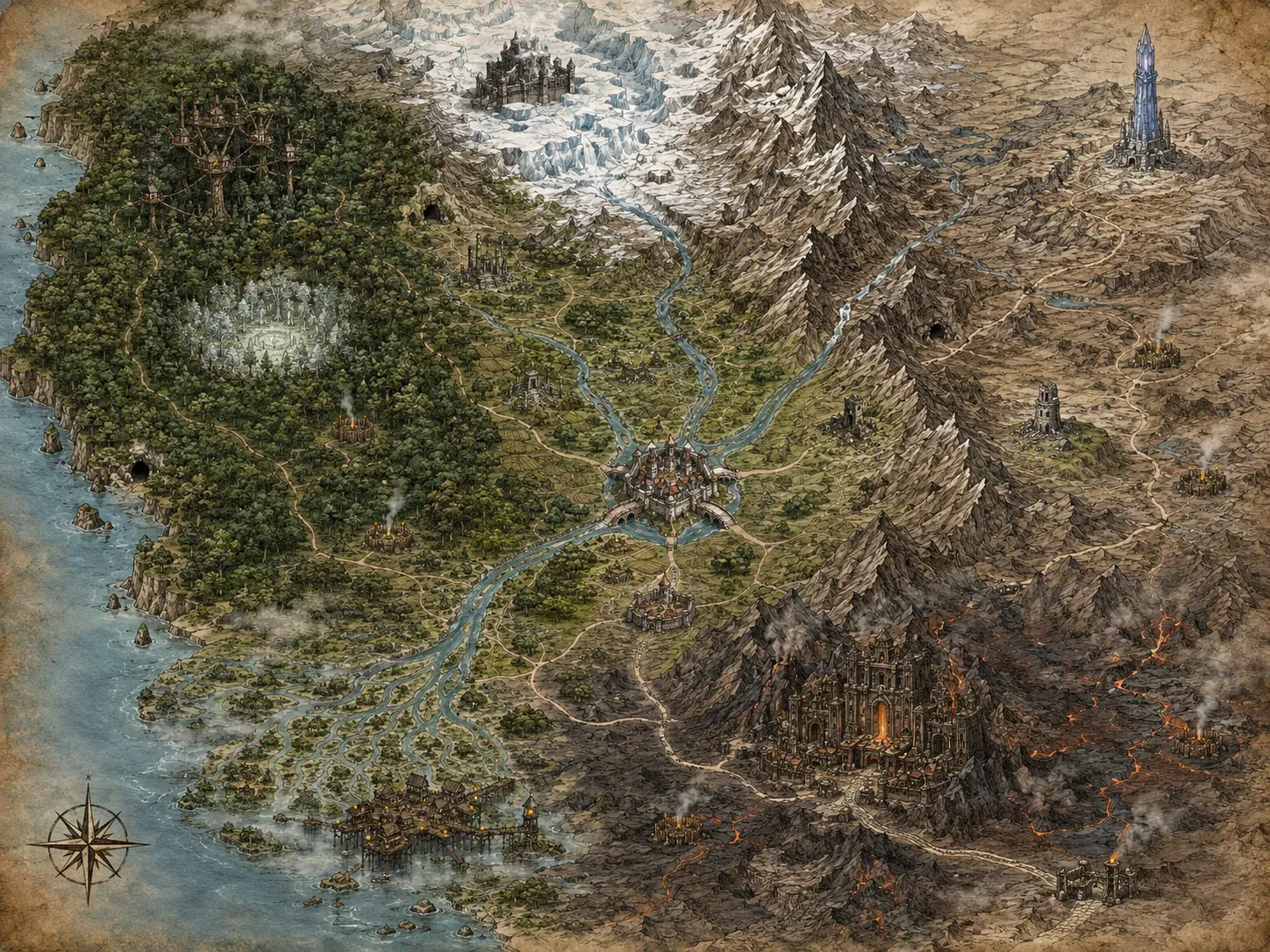
Continent map on parchment: forests to the west, glacier to the north, central mountain range, volcanic region to the south-east, marshes to the south-west and a city of bridges at the centre
Art

The world map: three maps, not one

Elyndor is spread across three layers and each has its own drawn map. Here are the surface, the sky and the underdeep — and what they are for besides looking good.

3 min read

Art

The intro is done

Thirty-one seconds of paper, gold thread and candlelight. Ascension's world is not introduced with a map: it is introduced with a book that opens by itself.

2 min read

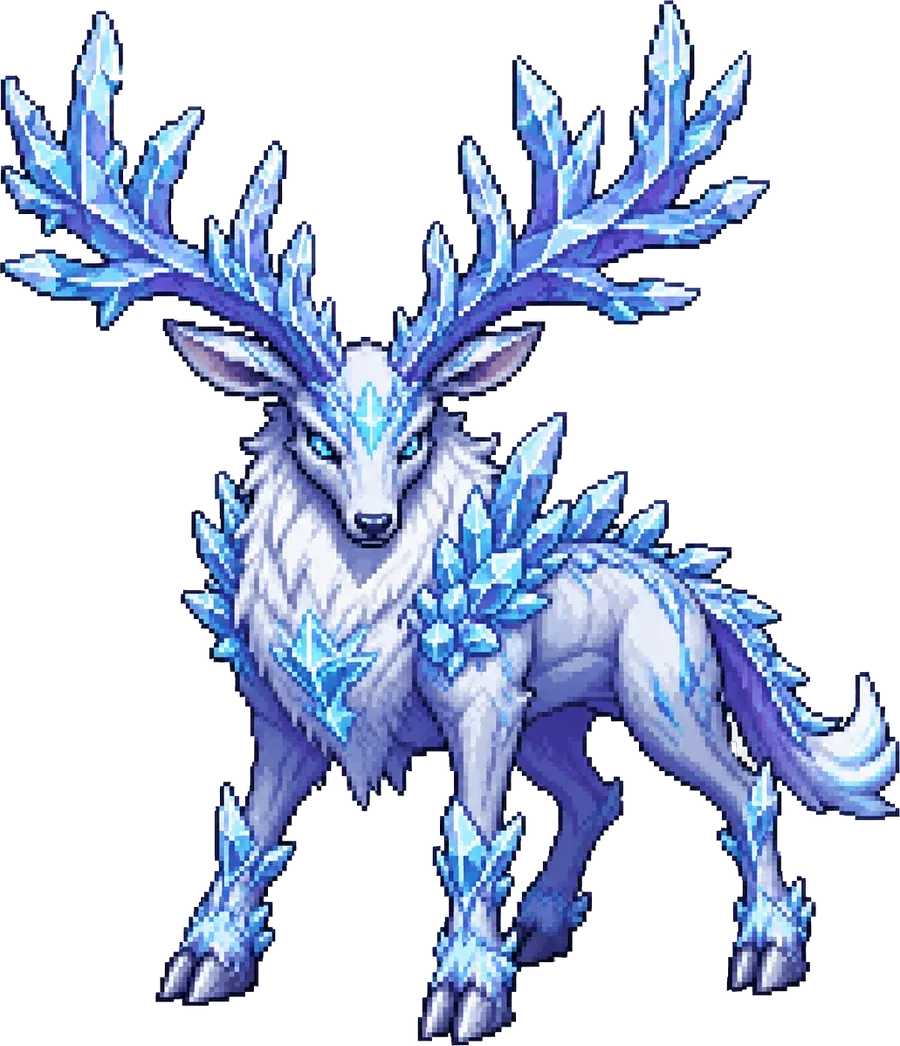
Crystal stag: white and blue coat with branching antlers of ice
Art

Ten from the bestiary

From the 253-monster codex, ten from ten different families. What they are, how they fight, and why none of them has to be killed.

4 min read

Leo in finish C: blue tunic and scarf, steel pauldrons with gold trim, round shield and drawn sword
Art

How Leo came to look like Leo

Three months, three rebuilds and a dozen-odd revisions. Every attempt Ascension's protagonist went through, including the ones that did not survive, up to the design that stays.

10 min read

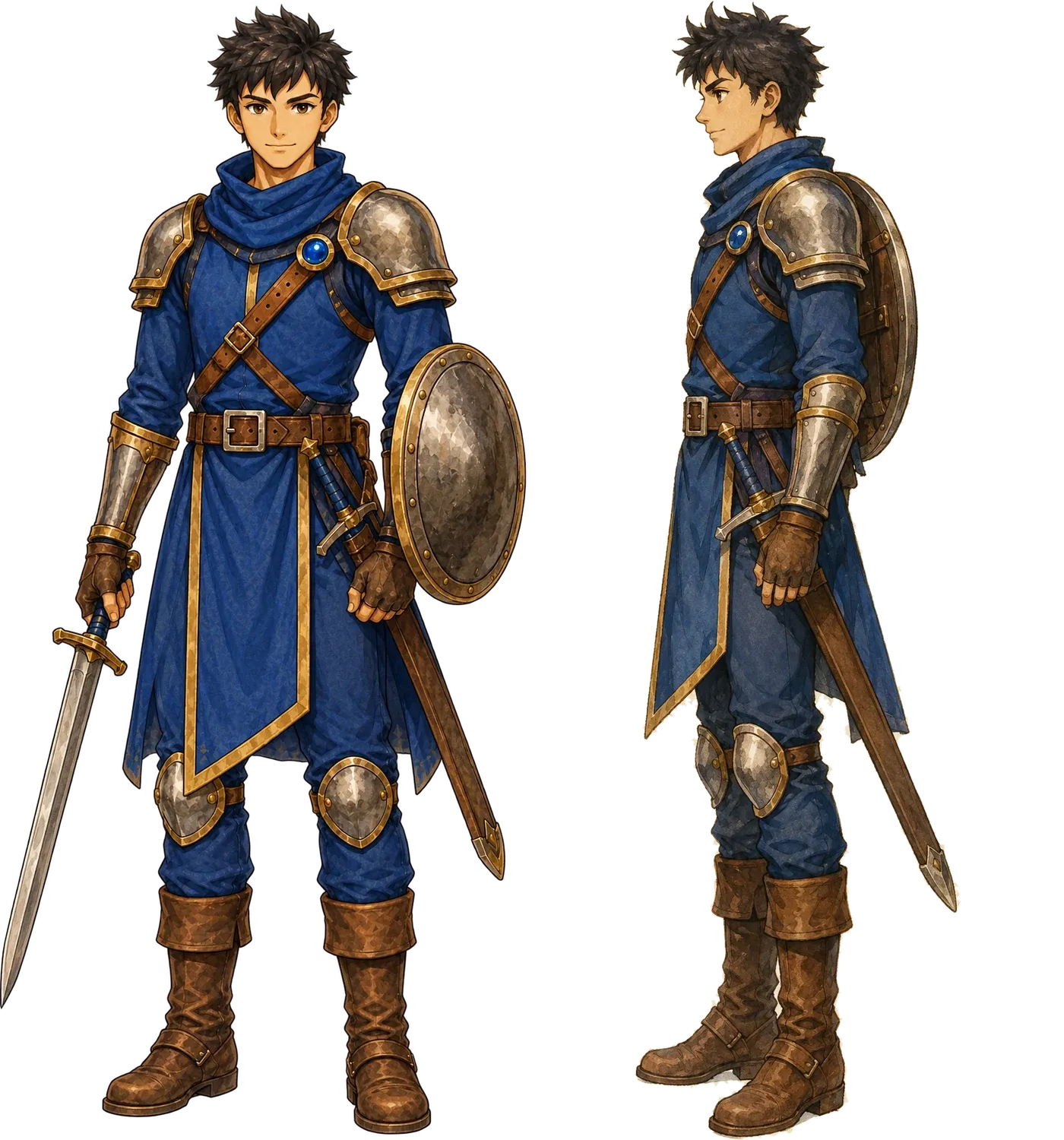
Leo front and profile in the final artwork for the selection screen
Art

The selection artwork: the canonical Leo

The design taken to final art, front and profile, with the sword and shield integrated. From here Leo stops being a reference and becomes the source of everything else.

1 min read

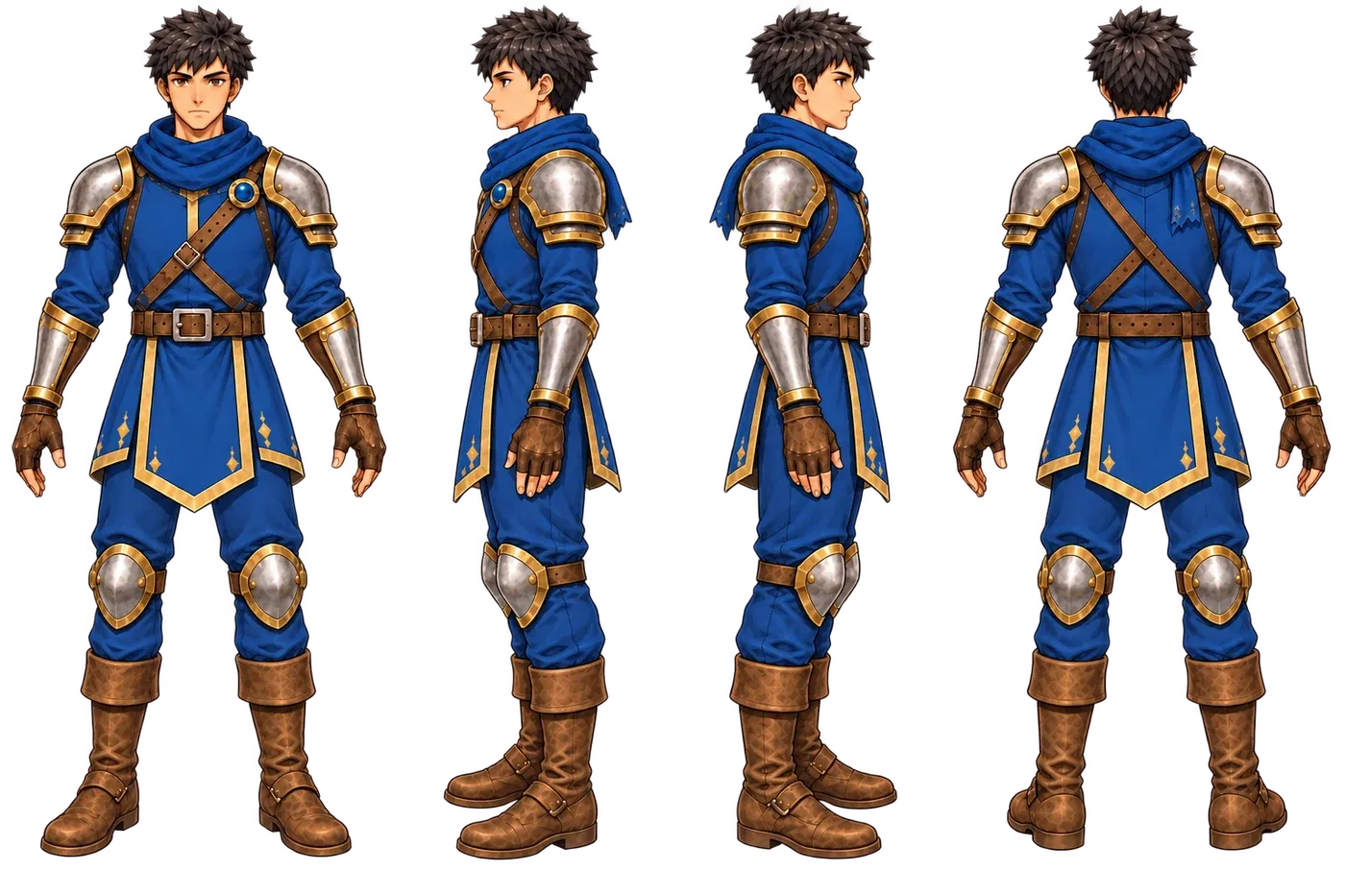
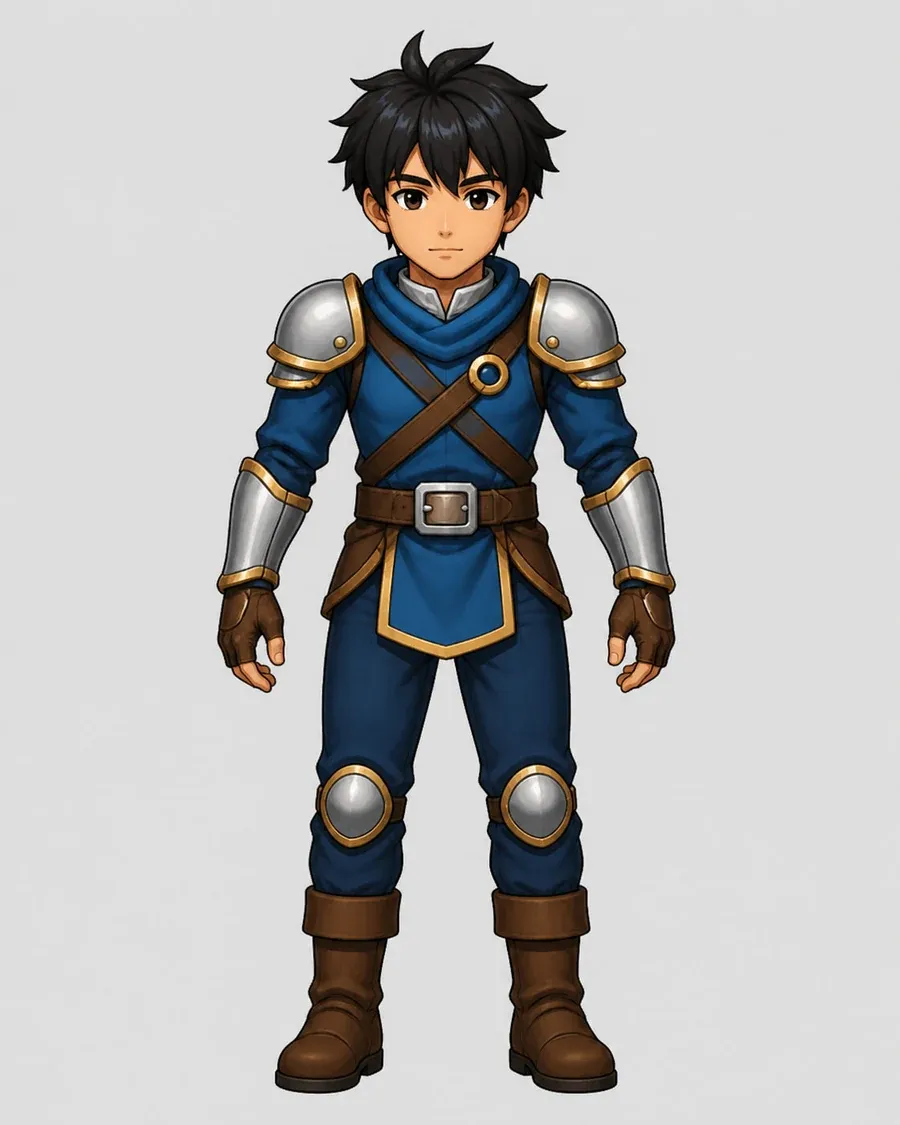
Leo's final design on a light background: anime face, black spiked hair, blue tunic with steel pauldrons and gold trim, crossed straps, knee guards and brown boots
Art

The portrait that came out of ten pixels

I generated Leo's dialogue bust from the game sprite, where the face is about ten pixels across. The generator invented a face, and it came out semi-realistic. The lesson forced the design that rules the face.

1 min read

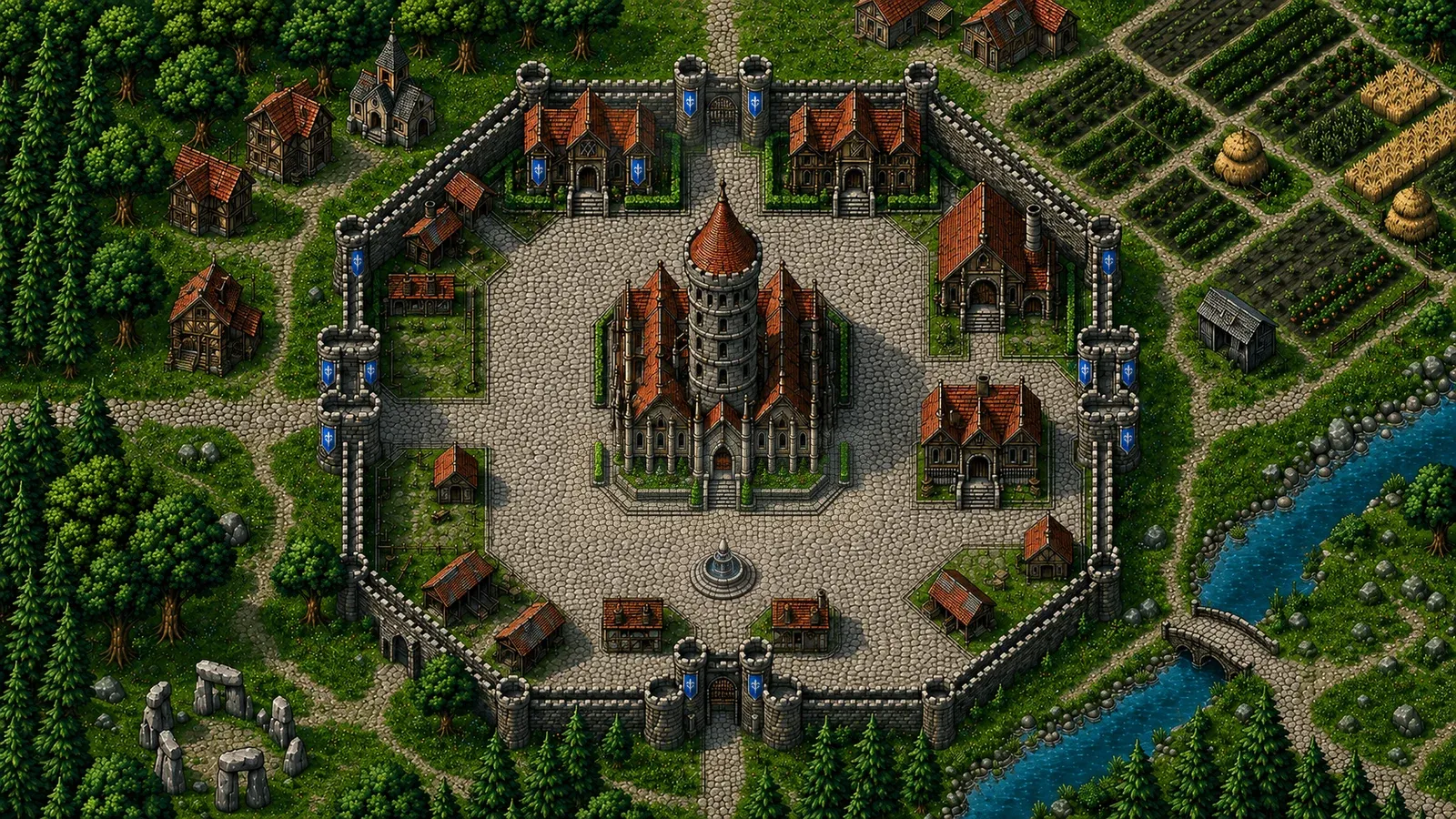
First full-resolution version of the citadel, with the composition already final but an uneven finish
Art

Painting the citadel: evening it out costs more than drawing it

The design was there; what was missing was painting it at the resolution you play at. That is where the real work showed up: crisp stretches next to smeared ones, painted shadows the engine cannot move, and a list of one-off mistakes.

2 min read

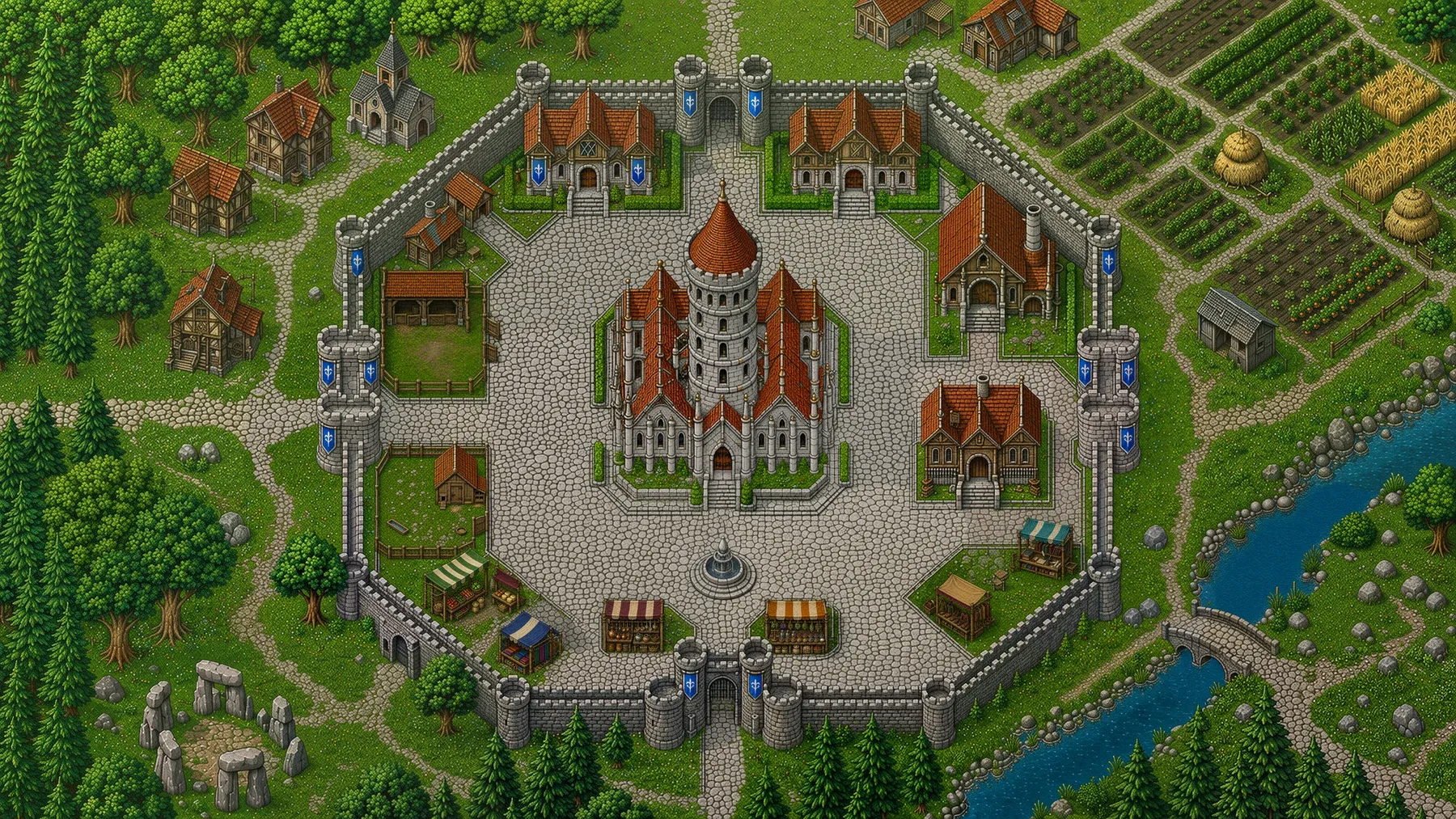
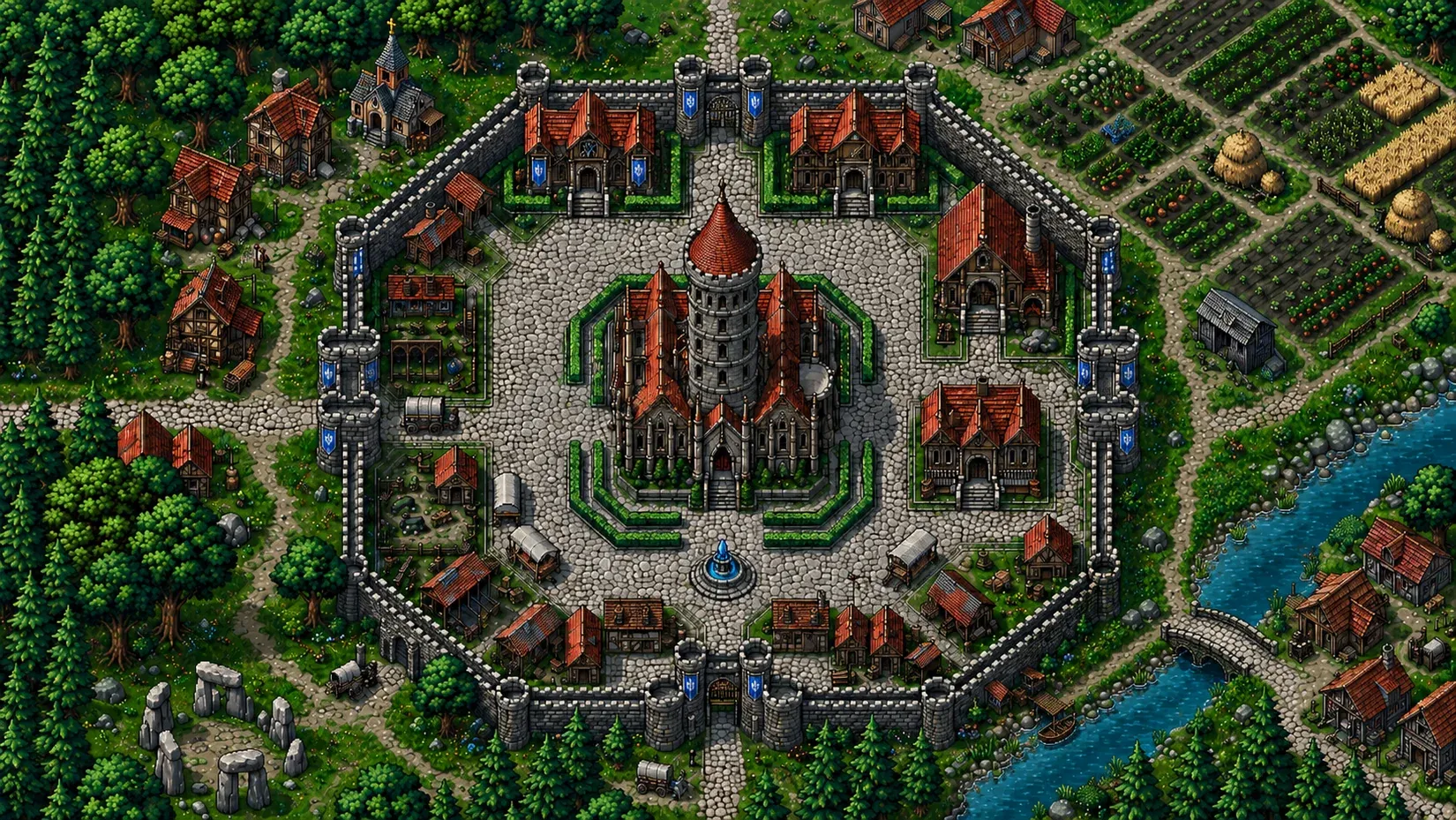
The redesigned citadel: octagonal wall, cathedral with tower at the centre, buildings around the plaza, river and bridge to the east, megaliths to the south-west and fields to the north-east
Design

A single exit: why a village that worked got scrapped

The problem was not the quality: it was that the enclosure had one gate, to the south. A setting can be beautiful and badly connected. This one was, and the world map gave it away.

2 min read

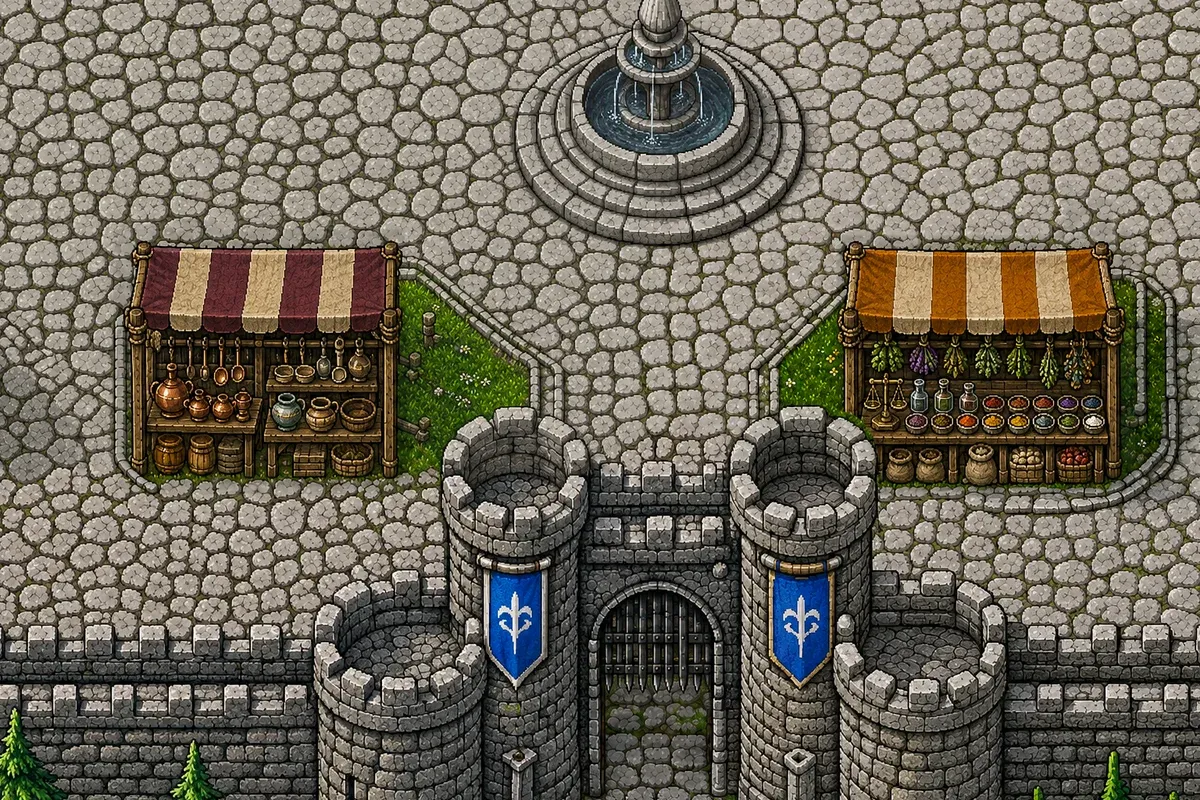
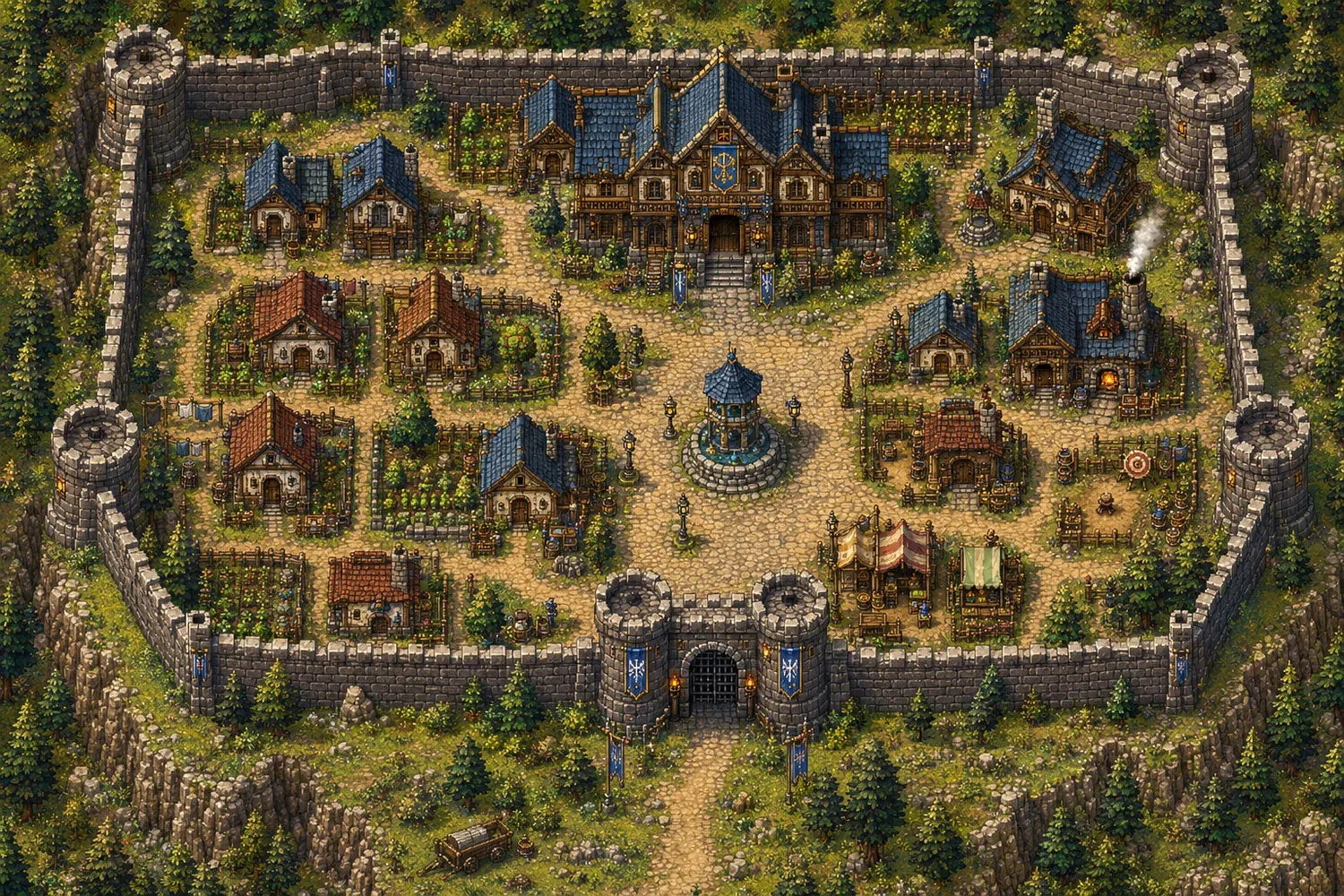
The assembled village: rectangular walled enclosure with round towers, great hall to the north, houses with blue and red roofs, vegetable plots, central fountain and market stalls
Art

The village is playable: Leo walks his town

With the measured pieces, the first complete enclosure was assembled, with physics, collisions, a camera and neighbours. It worked. And it still had to be scrapped.

1 min read

Environment asset kit: wall stretch, corner, tower, guild, smithy, two houses, stable, stall, well, lamp post and loose props, with Leo on the left for scale
Art

A catalogue before a setting

The first attempt at the place where the game begins was not a setting: it was a kit of pieces. A wall, a tower, two houses, a well. And Leo in a corner, because everything is measured against him.

1 min read