Art
Leo C: ninety-three frames to draw a sword
A new line with its own finish, eight directions that are headings rather than sides, and a sword draw rejected once for deforming the arm despite passing technical review.
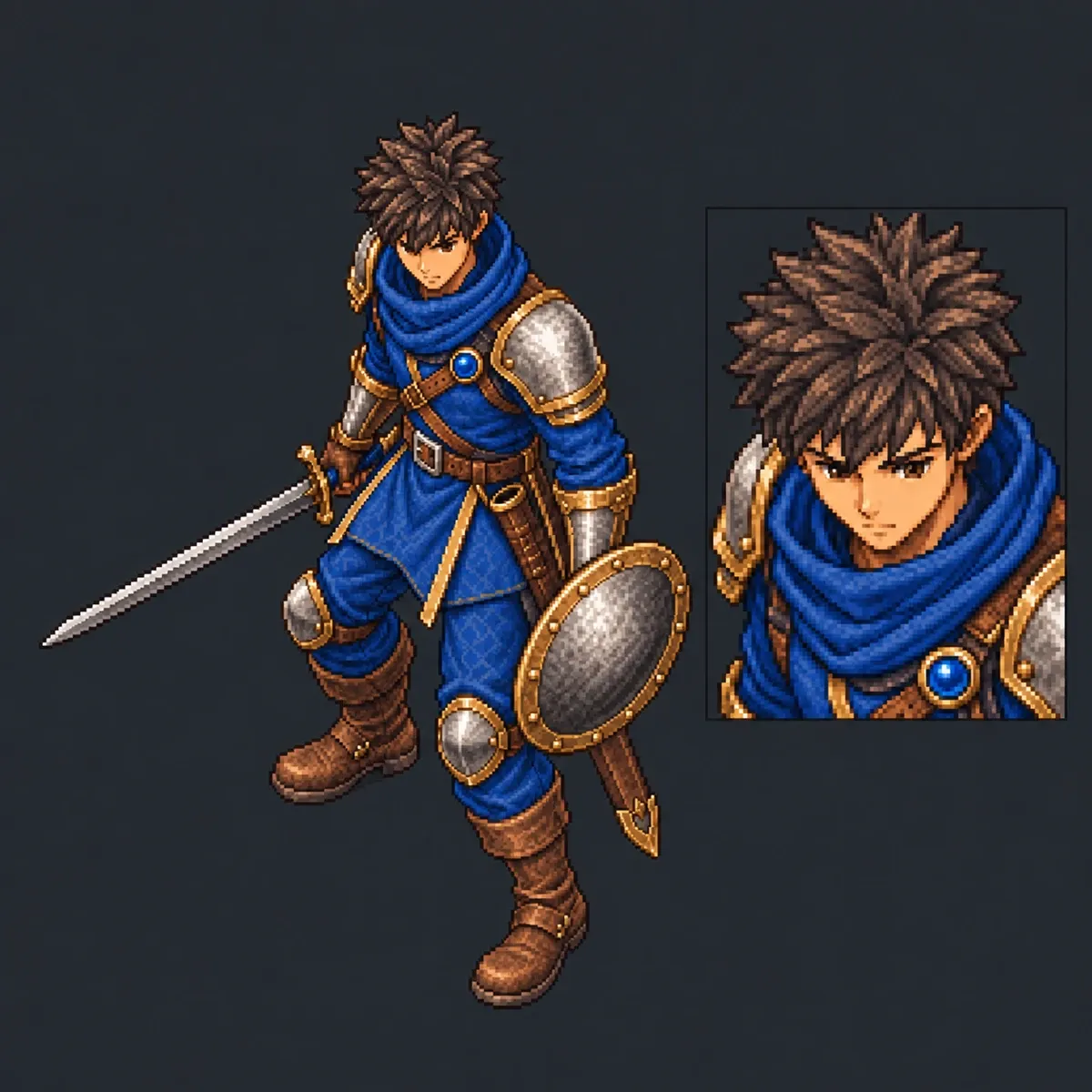
And then he was rebuilt again.
This is not a touch-up of last week’s model: it is a new line, with a different movement base and its own finish, the one the project calls finish C.
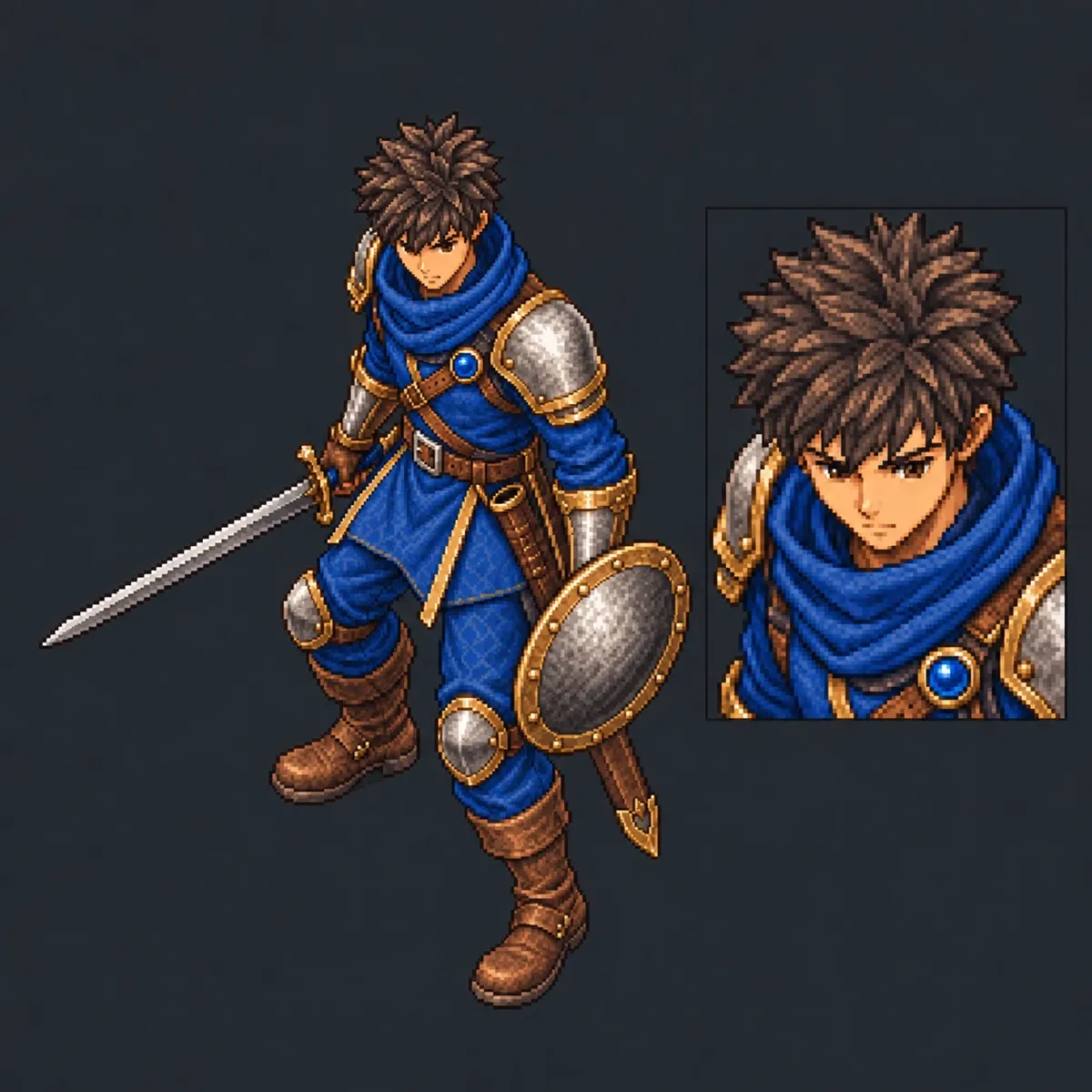
Orthographic camera at 35.264°, a 384 × 384 canvas and eight directions that are headings on the map, not anatomical sides: no view is obtained by flipping another. The sword is always in the right hand and the shield in the left, even when the character faces west.
The draw
This is the animation that defines the delivery: ninety-three frames, three seconds exactly, and in them Leo draws the sword, takes up the shield and settles into guard.
It costs more than it looks. An earlier version was rejected because the right arm and wrist deformed at the moment the blade came out — and it had passed technical review, which is the lesson: the numbers adding up does not mean it looks right. It needed a different movement base, the sword integrated again, and then tuning until the blade passed through neither body, head, shield nor its own scabbard in any frame.
Twelve revisions in four days
From there on it was almost all finish work. Face and fringe, pauldrons, knee guards, the right boot, the scarf, the left sleeve, the shield rim, the boot cuffs, the bracer, the scabbard, the grip, the straps, the leather under the pauldron, the overlap of a plate, both shield straps centred on the rim, the cloth, the metal, and finally the trim on the right knee guard.
Each one with a full backup of the previous, in case it had to go back.
What is still pending
The model’s repaint does not cover 360°. The areas the camera never sees in any of the eight directions still carry the base model’s original texture, without passing through finish C. It does not get in the way of playing, but it is undone and worth saying so.
What I take from it
The deformed-arm rule, which is the one that cost me most to learn: a technical validation is not an artistic approval. No intersections and no bones out of range does not mean the animation looks good. Only watching it says that.