
Art
The first playable Leo: eight directions and sixty-four frames
From concept to sprite. The system that turns a character into eight-direction sheets already worked, and Leo was the first through it: this is the Leo the prologue was first played with.
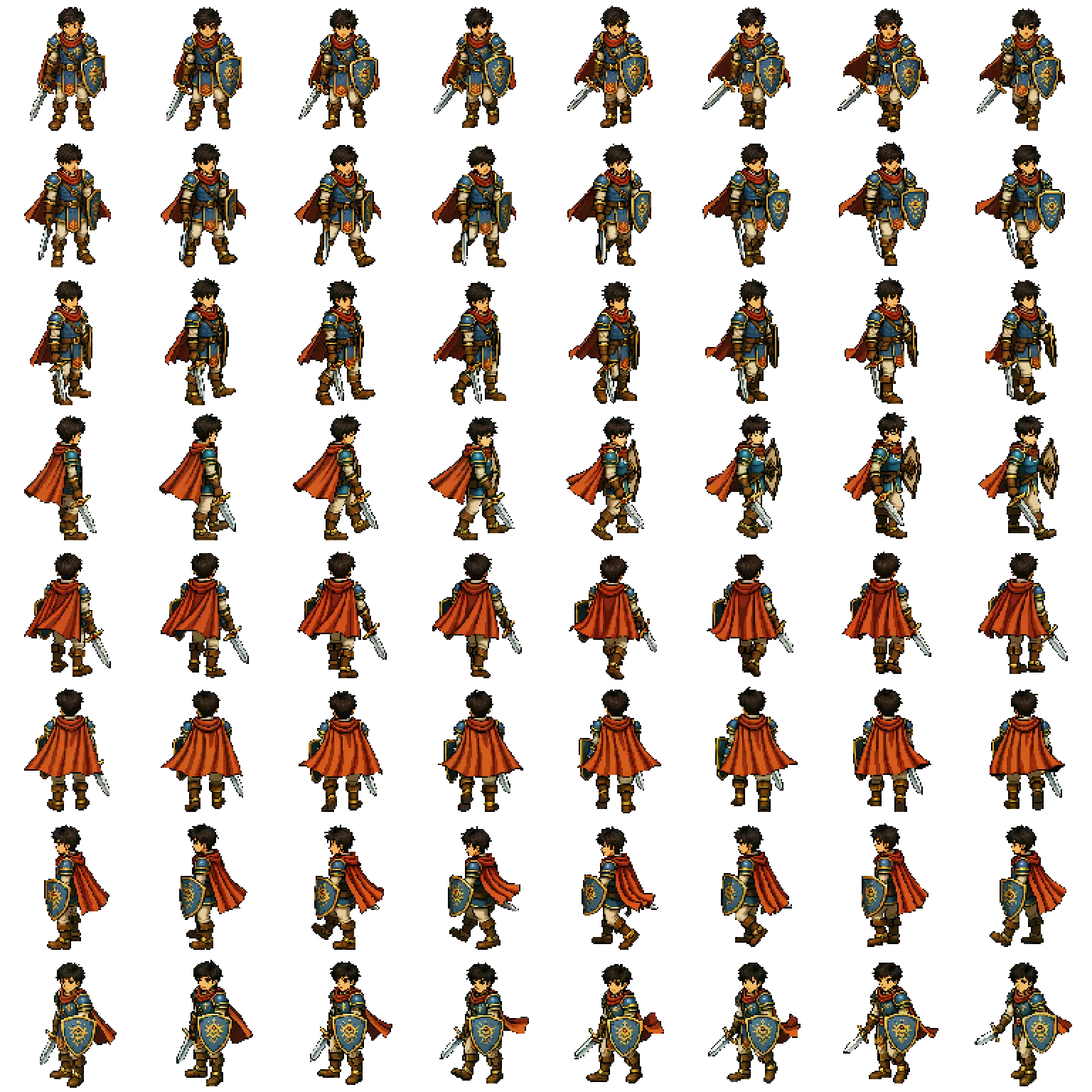
The concept existed. What was missing was turning it into something that could move across a screen.
The system that turns a character into eight-direction sprite sheets at 160 px already worked, and Leo was the first through it.
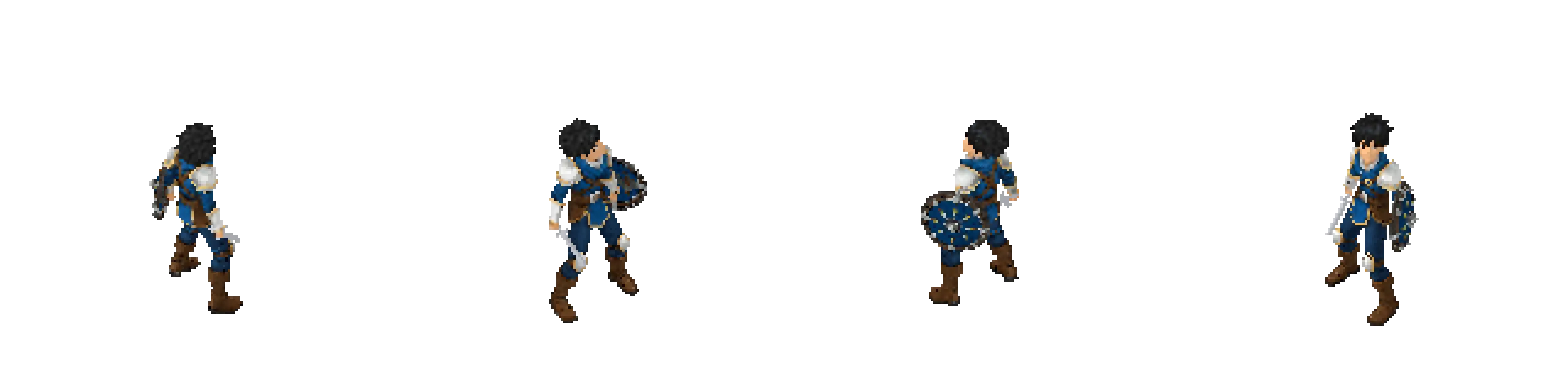
Out of it came the first genuinely playable Leo: a character generated with PixelLab, with his full walk cycle in all eight directions — sixty-four frames — ready to drop into Godot.
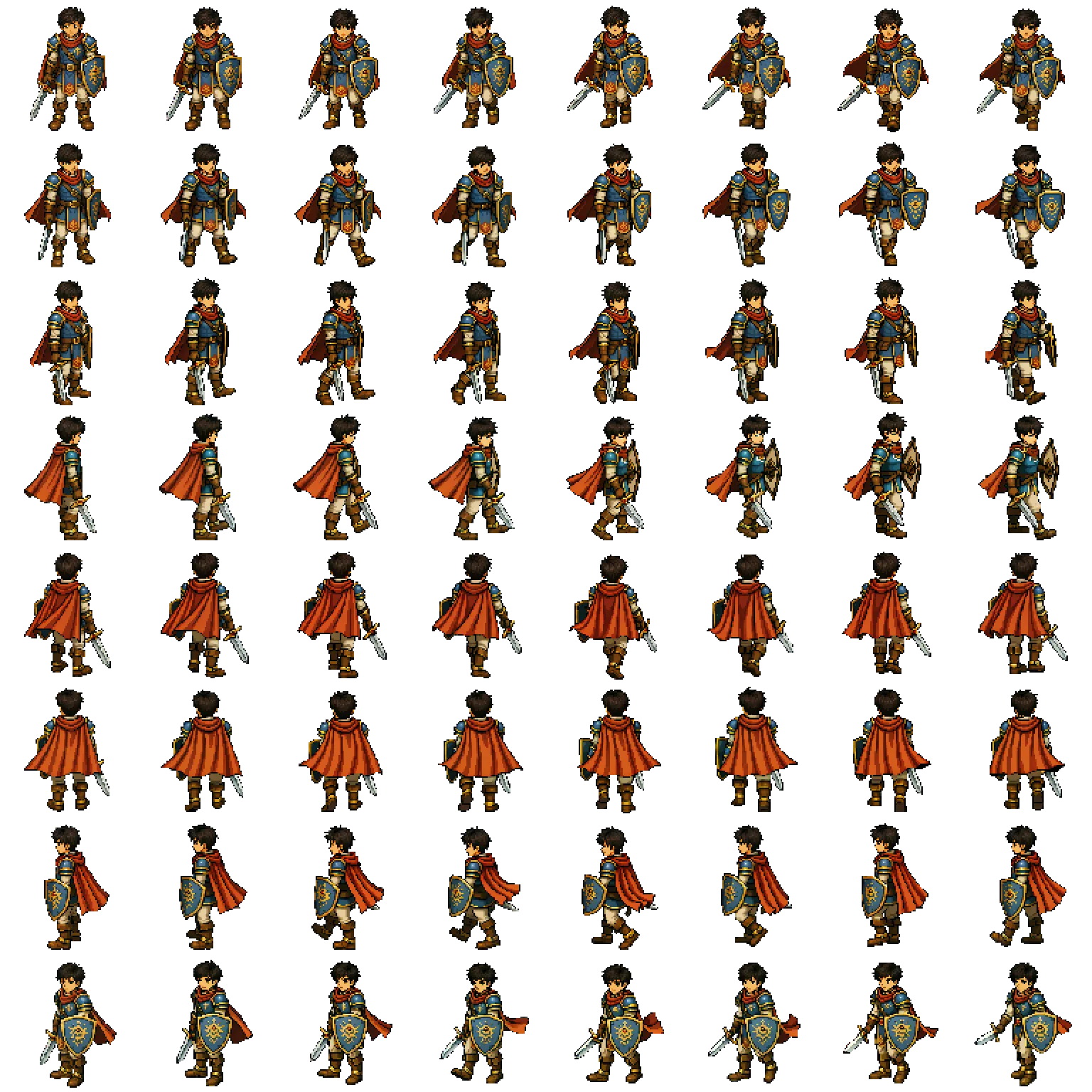
This is the Leo the game used for weeks, and he has a merit no later version takes away: the prologue was played for the first time with him. He reads well in motion, you can tell which way he is facing, and he made it possible to stop imagining the game and start playing it.
What he did not have was a chain behind him. Every new animation — attacking, dying, taking a hit — was an independent generation with its own drawing and its own approval. That works for one walk cycle. It does not work for the hundred and twenty-two animations a complete hero needs.
That limit is what, months later, forced a rebuild from a single source. But that is another entry.